The Best LED Pendant Lights for a Modern Kitchen Guide
Affiliate Disclosure:
The Modern Bliss partners with several affiliate programs, meaning that I can earn a commission from purchases/clicks by those who visit this site at no additional cost to you!
Upgrade your kitchen with the best LED pendant lights of 2025. Learn how to choose, style, and install modern LED pendants for a brighter, more functional space.
Did you know that switching your kitchen lighting can boost your home’s perceived value by up to 12%? I read that in a design report last year and honestly, it stopped me in my tracks. Lighting feels like such a small detail… until you change it, and suddenly your whole kitchen feels calmer, brighter, and more intentional.
As someone who has spent way too many weekends rethinking my own lighting setups—seriously, I once tried installing a pendant light in the kitchen of my tiny efficiency apartment, hung it crooked, and somehow didn’t notice for two full weeks—I’m a big believer in choosing fixtures that balance function, efficiency, and style. I’ve learned (sometimes the hard way) that good lighting doesn’t have to be flashy to be effective. And nothing checks those boxes quite like LED pendant lights, especially when you’re working with a modern, minimal kitchen aesthetic.
I’ll walk you through what actually matters when choosing LED pendant lighting, what I wish I had known earlier, and how one thoughtfully chosen fixture took my kitchen from “ehh” to simple, modern, and pulled together.
Why LED Pendant Lights Are Perfect for a Modern Kitchen
- Energy efficiency and long-term savings
- Sleek, modern aesthetics
- Adjustable color temperature options
- Better task lighting for cooking and prep
- Lower maintenance and longer lifespan
- Works with dimmers and smart home setups
I’ll be honest—there was a time when “LED lighting” and “beautiful design” didn’t belong in the same sentence. Years ago, the bulbs had that bluish, doctor’s office vibe. You know what I mean. But the first time I installed a high-quality LED pendant light above my own kitchen island, everything changed. The kitchen suddenly looked cleaner and sharper, and I realized how much lighting had been holding the space back.
LED pendant lights solve a problem many homeowners don’t even notice at first: kitchens need layered lighting, and overhead cans alone just don’t cut it. I used to rely entirely on recessed lighting and wondered why my countertops always felt dingy, no matter how much I wiped them. Once I added LED pendants, I finally got that warm, welcoming glow I’d seen in magazine photos but couldn’t achieve myself.
One of my favorite things about LED pendants is how insanely energy-efficient they are. I’m talking up to 75% less electricity than incandescent lighting. Over the years, that adds up. And if you’re like me and constantly leave lights on “for ambiance,” LEDs won’t guilt-trip you the way traditional bulbs will.
Another reason these lights work so well for modern kitchens is design flexibility. LEDs are tiny, which means designers can create slimmer, sculptural fixtures that feel more like art than lighting. My first pendant set was chunky and heavy—old-school halogen—and let me tell you, swapping them for sleek LED pendants instantly opened up the room. Lighter visual weight, cleaner sightlines. The whole vibe changed.
Color temperature is another big thing people overlook. I used to think “warm white” was the only option, but LED pendants let you choose exactly how you want your kitchen to feel. Want cozy? Go warm. Want crisp and modern? Neutral or cool tones can make your marble countertops sparkle like they’re in a showroom. I even installed tunable pendants once, and the joy of adjusting the light depending on whether I was prepping dinner or hosting friends was honestly underrated.
And let’s not forget lifespan. Good LED fixtures can last 20+ years. That means fewer bulb changes, fewer maintenance headaches, and more consistent light output. I can’t tell you how many times I used to climb on countertops—dangerously—to change halogen bulbs that blew out every few months. Never again.
When you add all this up, LED pendant lights aren’t just stylish. They’re practical. And whenever design meets practicality? That’s a win for any modern kitchen.
How to Choose the Right LED Pendant Light for Your Kitchen
- Consider island size and pendant spacing
- Choose appropriate lumens and brightness
- Match color temperature to your design style
- Balance pendant size with ceiling height
- Decide between single pendants vs. multi-light fixtures
- Evaluate dimmer compatibility and smart home integrations
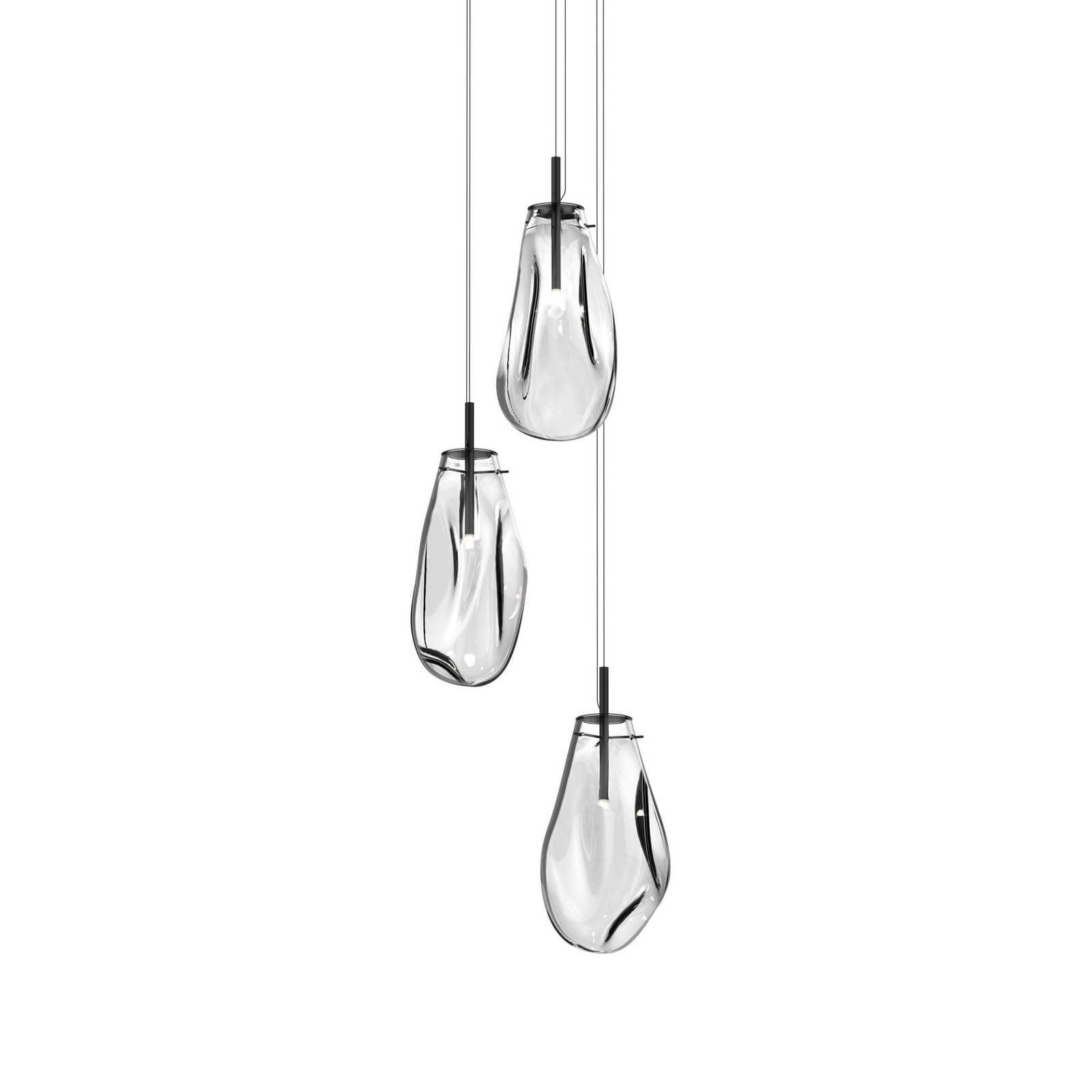
- Example: Liquid 22” SONNEMAN pendant (affiliate link)
Choosing the right LED pendant light can feel overwhelming at first—I’ve been there. I remember standing in a showroom once, staring at rows of pendants, completely convinced I’d accidentally redo my entire kitchen around the wrong fixture. But after upgrading my own lighting (several times, because I can’t leave well enough alone), I’ve learned what actually matters—and what just stresses people out for no reason.
The first thing I always tell people is to look at the size of your kitchen island. A smaller island doesn’t need three pendants; in fact, it can make the space look cluttered. Larger islands, on the other hand, look amazing with either two oversized pendants or a clean row of three medium ones. I once tried to put three huge pendants over a tiny island… and it looked like a spaceship docking. Don’t be like me.
Next, look at lumens, which is just a fancy term for brightness. Most kitchen pendants fall somewhere around 300–800 lumens per fixture. If you cook a lot or have darker cabinetry, go higher. If your kitchen gets natural light or you want something more ambient, lower lumens work beautifully.
Then there’s color temperature. This one matters more than people think. Warm white (2700K) gives off that cozy, golden glow. Neutral white (3000–3500K) is what most modern kitchens use because it’s clean without feeling cold. Cooler temps (4000K+) make everything look sharp but can feel sterile. I tested a 4000K fixture once—big mistake in a beige kitchen. Everything suddenly looked… gray.
Pendant height and scale are huge, too. If you have low ceilings, avoid heavy or tall pendants. If you have vaulted ceilings, go dramatic! Use that height. And if you’re not sure about scale, here’s my favorite tip: cut out a piece of cardboard in the size of the fixture you’re considering, hold it up, and see how it looks. It sounds silly, but it works.
For those who want something truly stand-out, one of the most stunning fixtures I’ve ever used is the SONNEMAN Liquid 22 Inch 3 Light LED Multi-Light Pendant. It’s dramatic, sculptural, and honestly, it looks like custom art. If you’re upgrading to a modern luxury look, this is the one I personally recommend:
Liquid 22” 3-Light LED Multi Pendant by SONNEMAN — $4260
Shop Here: https://dub.sh/aASvidP
Finally, think about dimmers. Dimmable LEDs are life-changing. Being able to shift from bright food prep to warm entertaining mode with one slide? Chef’s kiss.
Choosing the right pendant doesn’t have to be scary. Stick to the essentials—scale, brightness, color temperature—and you’ll end up with something that feels intentional and beautiful.
Best Placement Tips for LED Pendant Lights in a Modern Kitchen
- Ideal hanging height above islands
- Proper spacing between multiple pendants
- Preventing glare and shadows
- Coordinating with recessed lighting
- Using pendants to create focal points
- Layering ambient, task, and decorative lighting
When I installed my first set of LED pendants, I hung them way too high. I thought—incorrectly—that pendant lights were supposed to hover up near the ceiling like little decorative ornaments. Spoiler: they’re not. I spent a week making confused faces at my kitchen island before finally measuring things correctly and rehanging them at the proper height. So trust me when I say: placement matters more than people realize.
The magic number for pendant height over a kitchen island is usually 30–36 inches above the countertop. This puts the light at the perfect level to illuminate your workspace without blocking sightlines. The funny part? Once I lowered mine, the whole room suddenly felt cozier and more balanced. It’s wild how a few inches can make or break a design.
Next comes spacing. If you’re using three pendants, keep them about 24 inches apart (center to center). Two pendants? Space them at about one-third intervals along the island length. I once saw someone space their pendants evenly but then place the island seating in a completely different configuration—it looked like the lights and chairs were arguing. Trust your layout. Let the pendants highlight the functional zones of your kitchen.
I also learned the hard way that pendants can cast weird shadows if placed too close to upper cabinets or reflective surfaces. Once, a fixture I hung created a dark line across my backsplash every night—it drove me nuts until I nudged the pendant six inches forward. Problem solved.
Another thing I tell people is to coordinate pendants with recessed lighting. Your pendants shouldn’t have to do all the work. Recessed lights should handle most of the general illumination, while pendants act as task and accent lighting. This layered approach is what gives kitchens that warm, magazine-worthy glow.
If you want your pendants to double as decor—and let’s be honest, many of us do—place them where they become a natural focal point. Center them over the island, or even line them up along a peninsula. The SONNEMAN multi-light pendant (the one I linked earlier) works especially well as a statement piece because it almost drips down from the ceiling like glass art.
At the end of the day, the goal is simple: create a lighting setup that looks intentional and thoughtfully placed. And if you mess up the first time like I did? Well, that’s why ladders exist.
Conclusion
Choosing the right LED pendant lights for your modern kitchen doesn’t have to be intimidating. Once you understand scale, brightness, placement, and style, the whole process becomes surprisingly fun—and the payoff is huge. There’s nothing like flipping a switch and watching your kitchen instantly look more polished, inviting, and expensive (in the best way!).
If you’re ready to upgrade, start small: measure your island, check your ceiling height, and pick one pendant style you genuinely love. And if you want a true statement piece, remember to check out the SONNEMAN Liquid Pendant I mentioned earlier—it’s a beauty for a reason.
Got your own lighting stories or tips? Share them in the comments—I learn just as much from other homeowners as I do from designers!